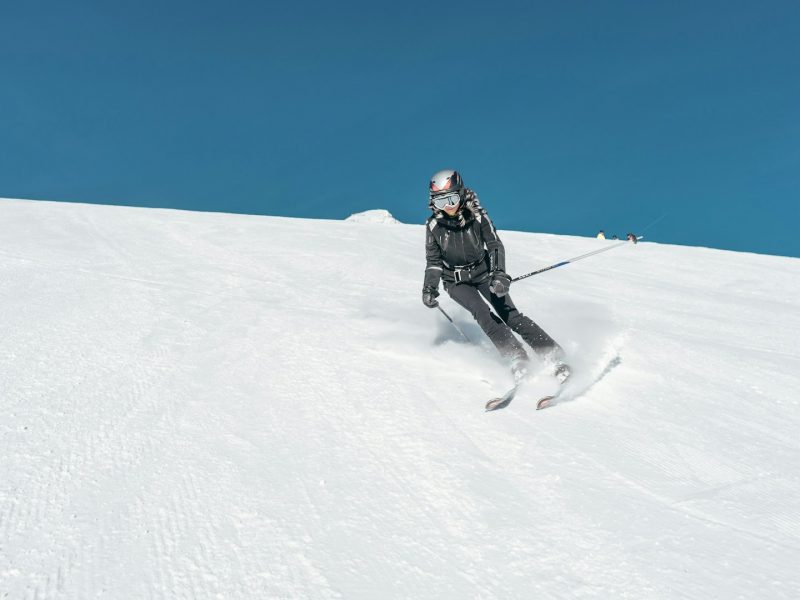

While many families spent their Christmas holidays relaxing indoors, former professional winter athletes Miriam and Felix Neureuther chose adrenaline over leisure. Miriam Neureuther, 35, a former biathlete, gave fans a rare glimpse into the family’s holiday itinerary via Instagram, revealing that the clan traded sofa-chilling for the slopes. The posts featured candid moments of the couple and at least one of their four children navigating chairlifts through the winter air.
For Felix Neureuther, 41, who retired from competitive skiing in 2019, these outings represent a shift in priority from chasing hundredths of a second to watching his children’s eyes light up with excitement. The serene holiday imagery stands in contrast to recent headlines involving Felix, who recently made waves with sharp criticism directed at the Ski Association. However, the holiday break appeared to be strictly about family and the joy of the sport, a sentiment Miriam shares as she passes her passion for snow—and her resilience following a career-ending accident in 2013—to the next generation.
Defining the Big Mountain Experience
This dedication to the sport resonates with enthusiasts across the Atlantic, where the debate over the premier “Big Mountain” terrain continues to rage. Creating a definitive list of ski resorts is an inherently contentious task, as rankings are subjective and invite argument. However, for the freestyle skier, the criteria shift from simple vertical drops to the “general feel” of the mountain. In this context, Big Mountain skiing mirrors the Freeride World Tour: a blend of navigating steep, technical faces while incorporating style and air.
The Heavyweights of Wyoming and California
At the pinnacle of this freestyle assessment sits Jackson Hole Mountain Resort in Wyoming. Often referred to as “The Big One,” it offers terrain that feels virtually unmatched globally. Iconic zones such as Corbet’s Couloir, Casper Bowl, and the Expert Chutes provide a seemingly endless supply of technical ground. While crowds can be an issue, lucky visitors occasionally find the mountain feeling like a deserted playground.
Following closely is Palisades Tahoe in California, often described as the Hollywood of big mountain skiing. The atmosphere here is electric, largely due to the positioning of the lifts. The KT-22 chairlift travels directly over some of the resort’s most challenging lines, such as The Fingers and massive cliff drops. This setup creates a unique pressure to perform, knowing an audience is watching from above. It pushes riders to go harder, cementing Palisades as a top-tier destination.
Unique Terrains and Unified Giants
Colorado’s Silverton Mountain offers a stark departure from the traditional resort experience, securing a high rank for its sheer rawness. It operates more like a backcountry operation, featuring a single lift and heli-skiing options. With areas like Hell’s Gate and Gnar Couloir requiring hiking to access, it caters to those seeking cliffs and mind-numbing exposure rather than amenities.
In Utah, the combination of Alta and Snowbird creates a unified paradise for advanced skiers. Located in Little Cottonwood Canyon, these resorts are famous for their “natural hips”—terrain features that allow for backcountry-style jumps within resort boundaries. Despite the crowds from nearby Salt Lake City, areas like Mt. Baldy and the Cecret Chutes offer accessible yet aggressive terrain that remains a staple for freestyle skiers.
Montana’s Humble Challenge and the Sierra Favorite
Montana’s Bridger Bowl serves as a humbling reality check for even experienced skiers. The upper mountain requires avalanche gear, a testament to the seriousness of zones like Mundy’s Bowl. The lack of high-speed lifts preserves a distinct atmosphere where the focus is purely on the skiing, not the luxury.
Back in California, Kirkwood—affectionately known as “The Wood”—holds a reputation for massive snowfall, sometimes exceeding 600 inches annually. This volume of snow means the terrain is dynamic; rock features and cliffs change drastically throughout the season. Favorites like The Sister Chutes and Devil’s Corral offer varying challenges depending on the snowpack depth, maintaining Kirkwood’s historic status as a freeride hub.
San Juan Gems and Deceptive Depths
Telluride, Colorado, might surprise some with its inclusion, but it remains a crown jewel for those willing to hike. The trek to Palmyra Peak opens up pristine chutes and cliffs that often remain untracked for days after a storm. Furthermore, the local culture fosters a mutual respect between skiers and patrol, where building jumps is permitted if done safely—a rarity in modern resort management.
Similarly, Crested Butte can be deceptive upon arrival. While the base area looks unassuming, the upper reaches accessed by the High Lift and North Face Lift are punishingly steep. Areas like Teocalli Bowl and the Headwall present complex, technical lines that justify the resort’s presence on any serious skier’s itinerary.
The Final Frontier and Southern Surprises
Rounding out the domestic heavy hitters is Big Sky, Montana. The resort is dominated by Lone Mountain, which allows for 270-degree skiing off the summit. The sheer scale of runs like the Big Couloir creates an immersive big mountain environment that is impossible to ignore.
Further south, Taos, New Mexico, offers a stark contrast with its sunny weather—often humorously dubbed “Cabo San Taos”—and relentless steeps. The terrain in zones like West Basin and Kachina Peak is consistently vertical, challenging a skier’s confidence at every turn. Finally, the list nods to Alyeska in Alaska. Though isolated, its reputation for playful, treeline terrain and deep snow demands recognition, proving that whether in the Alps with the Neureuthers or on a remote Alaskan peak, the search for the perfect run is a universal pursuit.